November 11, 2026
Dog Ear Infections: Symptoms, Causes & Treatment
Ear infections are one of the most common health problems we see in dogs. They can be painful and uncomfortable, particularly if they keep recurring. While some dogs are more prone than others, any dog can develop one.
Understanding what's normal for your own dog can help you spot when something's unusual, but if you feel unsure, our clinical team is happy to advise on WhatsApp.
An ear infection, also called otitis, happens when the ear canal becomes inflamed, often due to bacteria, yeast, or parasites.
A dog's ear canal is shaped differently from a human's, meaning moisture and debris can become trapped more easily, which can create the ideal environment for otitis.
Most infections affect the outer ear canal, however, more severe infections can spread deeper into the ear canal.
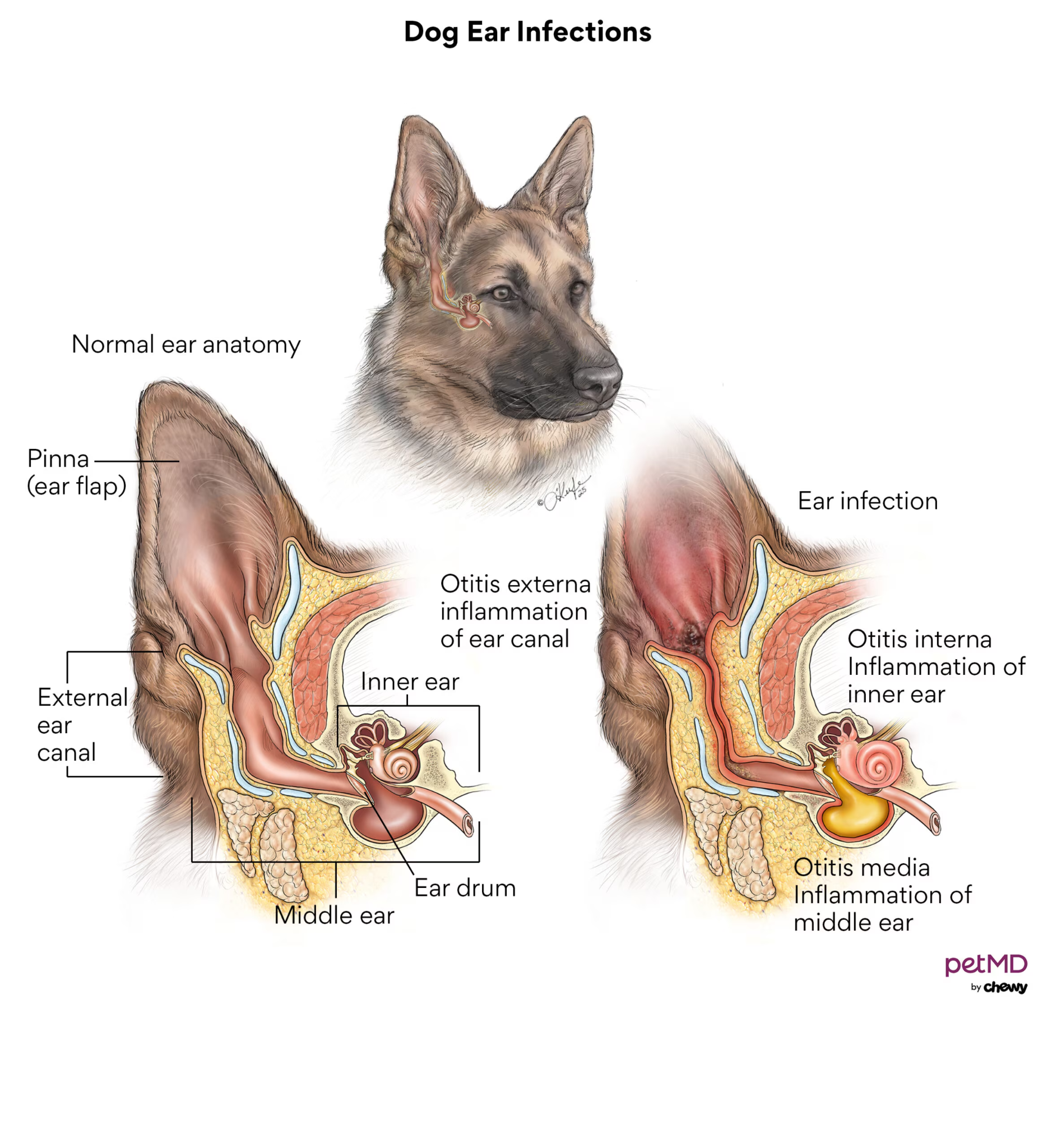
Vets generally identify ear infections by how deep they sit in the ear:
Ear infections are often uncomfortable and itchy, so dogs usually show clear signs that something is wrong. Common symptoms include:
Some dogs may also tilt their head or seem off balance if the infection becomes more severe.
If you spot any of these symptoms, it's a good idea to reach out to your vet.
Ear infections are painful and usually won't clear up properly without treatment. If they are left untreated, they can lead to more severe illness.
Ear infections can happen for many different reasons, and are often linked to an underlying issue that allows bacteria or yeast to overgrow.
Allergies are one of the more common causes of recurring ear infections in dogs. Food sensitivities and environmental allergies can both trigger inflammation inside the ear canal.
Dogs with allergies may also have itchy skin, lick their paws excessively, or be prone to recurrent skin infections.
Dogs that swim frequently or are bathed often are more prone to ear infections, since trapped moisture encourages yeast and bacteria to grow.
Ear shape matters too, dogs with pendulous (drooping ears) ears are at higher risk, with Basset Hounds among the most affected, as well as Cocker Spaniels. This is because air circulates less effectively inside a floppy ear.
Foreign material inside the ear can irritate the canal and lead to infection. Possible triggers include:
If a foreign object is present, dogs may suddenly shake their head violently or paw at one ear.
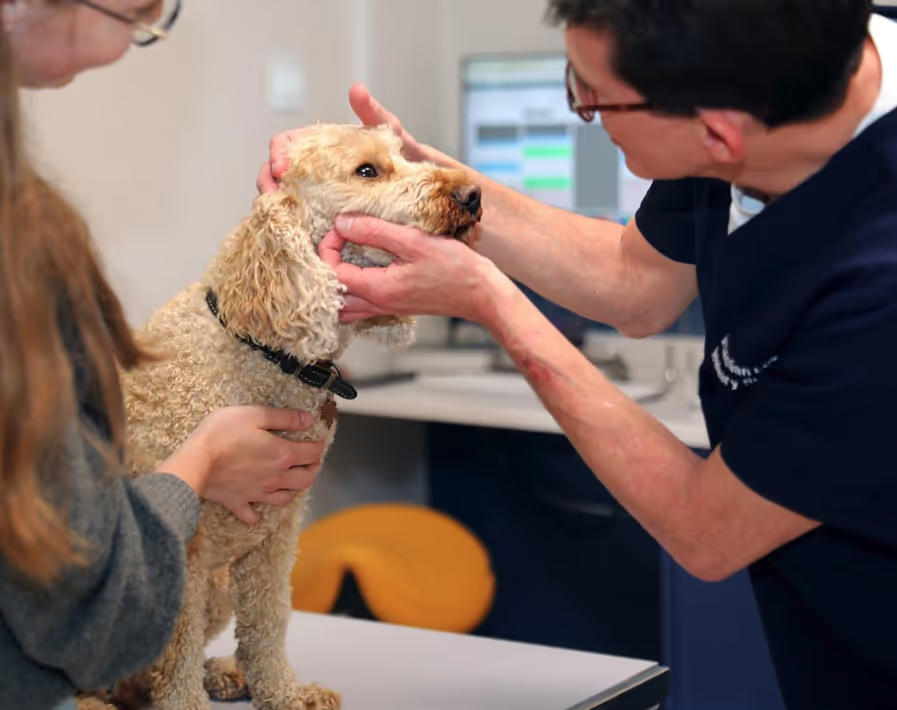
Treatment depends on the cause and severity of the infection. Your vet will usually examine the ears using an otoscope and may take samples to check for bacteria, yeast, or mites. Common treatment options include:
Most uncomplicated ear infections improve within one to two weeks of proper treatment, though chronic or severe infections may take longer to heal.
While some infections are tougher to prevent, good ear care and hygiene can reduce the risk of your dog developing one. You can help by:
Avoid using home remedies or old medication without veterinary advice, as this can sometimes make infections worse.
Occasional mild irritation can sometimes settle with good ear care through the use of a good cleaner, but don't wait and see if:
Ear infections rarely resolve on their own, and delaying treatment makes them harder to clear. Please contact your vet if you notice any of the above.
Dog ear infections are common and uncomfortable, but with early treatment and good ear care, dogs can recover well.
If you notice any of the symptoms listed above, it's best to arrange a veterinary check-up sooner rather than later. Prompt treatment can help prevent complications.
A dog that tilts their head or seems off balance may have a more advanced infection and should be seen promptly.
It's unlikely. Most need treatment to clear properly, and when left alone infections tend to get more painful rather than resolving on their own.
Vets typically examine the ear canal with an otoscope and may take a swab to check under a microscope, which helps identify whether bacteria, yeast, or mites are involved. This diagnosis helps guide the right treatment.

Yes, breeds with floppy or hairy ears, such as Basset Hounds and Cocker Spaniels, tend to be at higher risk, since air circulates less easily inside the ear canal. Dogs with allergies or ones which swim regularly are also more prone.
Checking them regularly, and managing any underlying allergies help. Avoid over-cleaning or using cotton buds, which can irritate the canal or push debris further in.
Yes, in some serious cases. Infections that spread to the middle or inner ear can affect hearing and balance, and repeated damage increases the risk of lasting loss.
Appointments today, advice immediately.
Veterinary care designed differently.